Upconversion
Phosphor Solutions
Professional supplier for fluorescent labeling, immunoassay, and bioimaging applications. 980nm NIR excitation eliminates autofluorescence interference, delivering unprecedented detection sensitivity for next-generation biomedical diagnostics.
Core Requirements for Biomedical Phosphors
Understanding the critical technical demands for biomedical fluorescent detection applications
Low Background Interference
Near-infrared excitation avoids biological sample autofluorescence, significantly improving signal-to-noise ratio for detection accuracy.
Deep Tissue Penetration
NIR light achieves several millimeters depth, enabling in vivo imaging and deep tissue detection scenarios.
Biocompatibility
Low-toxicity, non-irritating materials with surface functionalization for stable biomolecule conjugation.
Excellent Photostability
Resistant to photobleaching for long-term continuous observation without signal decay.
Batch Consistency
Core parameters with minimal batch-to-batch variation ensuring experimental reproducibility.
Biomedical Upconversion Phosphor Products
Advanced fluoride-based upconversion phosphors optimized for biomedical detection applications
Core Product: LD-980-B
Blue emission upconversion phosphor for high-sensitivity biomedical detection
| Model | Emission | Peak λ | Host | D50 | Excitation |
|---|---|---|---|---|---|
| LD-980-B | Blue | 478nm | Fluoride | 7μm | 980nm NIR |
| Key Advantages | Recommended Applications |
|---|---|
| Ultra-low background, deep penetration, excellent photostability, high upconversion efficiency | Fluorescent immunoassay, cell labeling imaging, biosensors |

980nm NIR Excitation → 478nm Blue Emission
Powder Color: Pure White
LD-980-B uses high-purity fluoride host with low phonon energy (~350cm⁻¹), achieving much higher upconversion efficiency than oxide hosts. The 7μm median particle size is optimized for biomolecule conjugation and cellular endocytosis, ensuring sufficient luminescence intensity without compromising biocompatibility.
LD-980-B achieves signal-to-noise ratio over 100:1 under 980nm NIR excitation, with detection sensitivity 5-10× higher than traditional UV-excited fluorescent materials. After surface modification, antibody conjugation efficiency reaches ≥90%, with post-conjugation luminescence retention ≥85%, meeting high-precision immunoassay requirements.
| Characteristics | Upconversion Phosphor (LD-980-B) | Traditional Biofluorescent Materials |
|---|---|---|
| Excitation Wavelength | 980nm Near-Infrared | UV-Visible Light |
| Background Interference | Ultra-low (avoids autofluorescence) | Higher (affected by autofluorescence) |
| Tissue Penetration | Several millimeters (deep detection) | Hundreds of microns (shallow) |
| Photostability | Excellent (resistant to photobleaching) | Average (prone to photobleaching) |
| Biocompatibility | Low toxicity, surface modifiable | Some toxic, varying modification difficulty |
Need Help Choosing the Right Product?
Our technical experts can recommend the optimal phosphor solution based on your specific requirements, processing methods, and application scenarios.
Technical Advantages & Business Impact
Delivering measurable technical and commercial value to biomedical detection enterprises
Low Interference + High Sensitivity
Improves detection accuracy → Create premium detection reagents/devices, enhancing market competitiveness
Deep Tissue Penetration
Expands application scenarios → Cover in vivo imaging, deep pathology detection, opening new markets
Excellent Photostability
Supports long-term detection → Compatible with automated equipment, improving efficiency
Mature Surface Modification
Reduces bioconjugation R&D costs → Shortens time-to-market, capturing opportunities
Application Industries
Empowering innovation across critical biomedical detection applications

Fluorescent Immunoassay
ELISA kits, immunochromatographic test strips, pathological section diagnosis, tumor marker detection
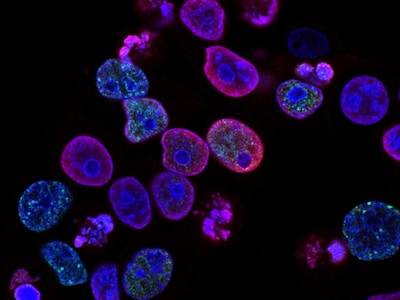
Cell Labeling Imaging
Live cell tracking, stem cell tracing, tumor cell localization, flow cytometry analysis

Biosensors
Enzyme activity detection, metabolite detection, pathogen detection, environmental pollutant monitoring
Customer Testimonials
Hear from biomedical enterprises that have transformed their detection capabilities
The LD-980-B phosphor improved our immunoassay kit sensitivity by 8x compared to conventional fluorophores. Background interference is virtually eliminated, allowing detection of extremely low biomarker concentrations.
Exceptional photostability - we can now perform long-term live cell imaging studies without worrying about signal decay. The surface modification service saved us 6 months of R&D time.
Deep tissue penetration capability opened new possibilities for our in vivo imaging platform. The technical support team provided invaluable guidance on bioconjugation protocols.
Experience Our Quality Firsthand
Request a free phosphor sample kit to test in your production line. Evaluate performance, processing compatibility, and quality before committing.
Biomedical Industry Services
Comprehensive support from material customization to application deployment

Surface Modification Customization
Carboxylation, amination, PEG modification, streptavidin modification and other customization services for different biomolecule conjugation needs.
Bioconjugation Guidance
One-on-one technical solutions for antibody, nucleic acid, peptide conjugation, including reaction condition optimization and conjugation efficiency testing.
Equipment Compatibility
980nm laser source selection and detection equipment parameter adjustment recommendations to ensure perfect "material + equipment" compatibility.
Fast Sample Delivery & Production
30g-100g samples shipped within 3 working days. Standard modification 7-10 days, special modification 15-20 days. MOQ as low as 1kg. 24-hour after-sales response.
Certified Excellence
We have established a comprehensive biomedical materials quality management system through multiple authoritative certifications including CNAS, RoHS, SGS and biocompatibility certifications. All products undergo rigorous full-item testing including purity, particle size distribution, luminescence intensity, biological toxicity, and surface functional group content, with detailed factory inspection reports and batch traceability support. With profound technical expertise, we have obtained more than 10 phosphor-related invention patents covering China, USA, EU, Russia, and PCT international patent systems.
Get Biomedical Industry Solutions Now
Free Application Design
Professional engineers provide customized application solution design based on your detection requirements
Surface Modification Service
Multiple surface modification options including carboxylation, amination, PEG, streptavidin
Fast Sample Delivery
30g-100g samples shipped within 3 working days worldwide
Full Technical Support
Bioconjugation guidance, equipment compatibility, 24-hour after-sales response